

The topic of byron thomas williams vehicle licensing penalties has become increasingly relevant in discussions about UK transport regulation and operator accountability. This case reflects how strict compliance rules govern commercial transport operations and how violations can lead to serious legal consequences. In the freight and logistics industry, licensing is not just a formality but a critical requirement that ensures road safety, operational integrity, and responsible business conduct across regulated transport networks.
The byron thomas williams vehicle licensing penalties also highlight the broader role of enforcement authorities in maintaining discipline within the transport sector. When operators fail to meet required standards, regulators step in with penalties that can include disqualification, suspension, or permanent restrictions. This case demonstrates how regulatory frameworks are designed to protect public safety while ensuring that transport companies operate within clearly defined legal boundaries.
Who is Byron Thomas Williams in the transport sector
Byron Thomas Williams is associated with the UK transport industry through his involvement as a company director connected to licensed freight operations. In regulated sectors like logistics, directors are held to high standards of responsibility because their decisions directly influence safety compliance, financial management, and operational control. Understanding the byron thomas williams vehicle licensing penalties requires recognizing the level of accountability imposed on individuals in such leadership roles.
The byron thomas williams vehicle licensing penalties situation emphasizes that directors are not merely symbolic figures in transport companies. Instead, they are legally responsible for ensuring that all operational requirements are met, including maintenance records, driver compliance, and vehicle roadworthiness. When these obligations are not fulfilled, regulators may impose direct penalties on both the company and its leadership structure.
Overview of UK vehicle operator licensing system
The UK operator licensing system is a regulatory framework designed to control the use of heavy goods vehicles and ensure that only qualified operators are permitted to run transport services. This system requires businesses to meet strict conditions related to safety standards, financial stability, and professional competence before receiving authorization to operate. Within this framework, the byron thomas williams vehicle licensing penalties case serves as an example of enforcement in action.
In relation to byron thomas williams vehicle licensing penalties, the licensing system demonstrates how compliance failures can result in severe consequences. Operators must continuously meet obligations, including vehicle inspections, driver management protocols, and proper record-keeping. Any deviation from these standards can trigger investigations and potentially lead to enforcement actions such as suspension or disqualification from holding an operator’s licence.
Details of byron thomas williams vehicle licensing penalties and disqualification
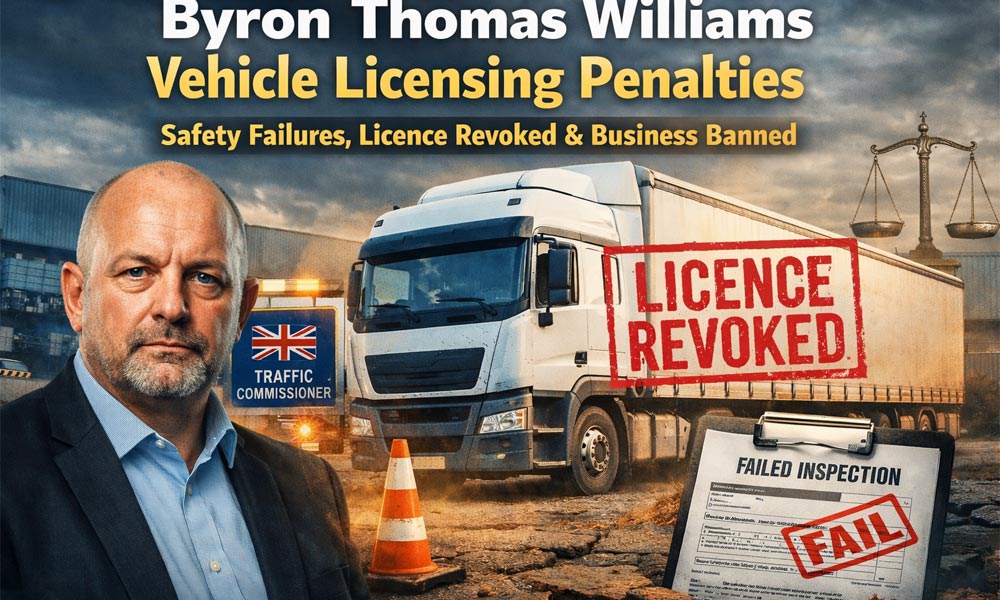
The enforcement action associated with byron thomas williams vehicle licensing penalties included a formal disqualification period that restricted involvement in licensed transport operations. This type of penalty typically prevents individuals from holding or obtaining an operator’s licence for a defined timeframe, which in this case was reported as a 12-month restriction. Such measures are intended to reinforce compliance and discourage repeat violations.
The byron thomas williams vehicle licensing penalties also extended beyond individual restrictions, impacting the ability to serve as a director in companies holding operator licences. This means that the consequences are not limited to personal penalties but also affect corporate participation in regulated transport activities. These restrictions reflect the seriousness with which licensing authorities treat operational breaches in the freight industry.
Reasons behind byron thomas williams vehicle licensing penalties
Regulatory bodies impose penalties like those seen in the byron thomas williams vehicle licensing penalties case when operators fail to meet required compliance standards. These failures may include inadequate vehicle maintenance, poor safety management, or repeated non-compliance with licensing conditions. Authorities evaluate whether the operator has demonstrated sufficient responsibility to continue operating within a regulated environment.
The byron thomas williams vehicle licensing penalties also suggest that ongoing compliance failures can escalate into formal enforcement actions. When issues persist over time, regulators may determine that suspension or disqualification is necessary to protect public safety and maintain industry standards. This approach ensures that only operators who consistently meet legal requirements remain active in the transport sector.
Impact of byron thomas williams vehicle licensing penalties on business operations
The business impact of byron thomas williams vehicle licensing penalties can be significant, particularly for companies reliant on logistics and freight services. Losing an operator’s licence or facing restrictions can disrupt delivery schedules, damage client relationships, and reduce overall operational capacity. These consequences often extend beyond legal penalties, affecting long-term business sustainability.
In addition, the byron thomas williams vehicle licensing penalties highlight how reputational damage can influence a company’s future opportunities. In the transport industry, trust and reliability are essential for securing contracts and maintaining partnerships. Once regulatory action becomes public, it can be difficult for affected businesses to rebuild credibility in competitive markets.
Industry lessons from byron thomas williams vehicle licensing penalties
One of the key lessons from the byron thomas williams vehicle licensing penalties case is the importance of proactive compliance management. Transport operators must implement strong internal systems to monitor vehicle safety, driver performance, and regulatory requirements. Failure to maintain these systems can quickly lead to enforcement actions that disrupt operations.
The byron thomas williams vehicle licensing penalties also demonstrate that regulatory oversight is continuous and strict. Companies cannot rely on occasional compliance checks; instead, they must ensure ongoing adherence to legal standards. This includes regular audits, training programs, and detailed documentation practices to avoid potential violations.
Legal framework behind byron thomas williams vehicle licensing penalties
The legal foundation for byron thomas williams vehicle licensing penalties is based on UK transport regulations governing goods vehicle operator licensing. These laws empower regulatory authorities to enforce compliance through sanctions such as suspension, disqualification, or licence revocation. The system is designed to ensure road safety and accountability within the commercial transport sector.
Within the context of byron thomas williams vehicle licensing penalties, legal enforcement also includes provisions for appeals and reviews. Operators may have the opportunity to challenge decisions or present evidence of improved compliance. However, such processes require strong documentation and proof that corrective actions have been implemented effectively.
Broader implications of byron thomas williams vehicle licensing penalties
The byron thomas williams vehicle licensing penalties case has implications beyond the UK, particularly for international logistics companies and transport operators. Many countries enforce similar regulatory frameworks, meaning that compliance failures in one jurisdiction can serve as a warning for global operators. Understanding these systems is essential for companies operating across borders.
The byron thomas williams vehicle licensing penalties also highlight the global importance of transport safety and regulatory compliance. As supply chains become increasingly interconnected, enforcement actions in one region can influence industry practices worldwide. This reinforces the need for standardized safety and compliance procedures across international transport operations.
Conclusion on byron thomas williams vehicle licensing penalties
The byron thomas williams vehicle licensing penalties case serves as a powerful example of how regulatory enforcement operates within the UK transport industry. It demonstrates that compliance failures can lead to significant personal and corporate consequences, including disqualification and operational restrictions that affect long-term business viability.
Ultimately, the byron thomas williams vehicle licensing penalties emphasize the importance of maintaining strict adherence to licensing requirements. For transport operators and directors, this case highlights the need for continuous compliance, strong internal controls, and a commitment to safety standards in order to avoid severe regulatory action and ensure sustainable business operations.
You may also read: Why Modern Mullets Are Trending Again
