
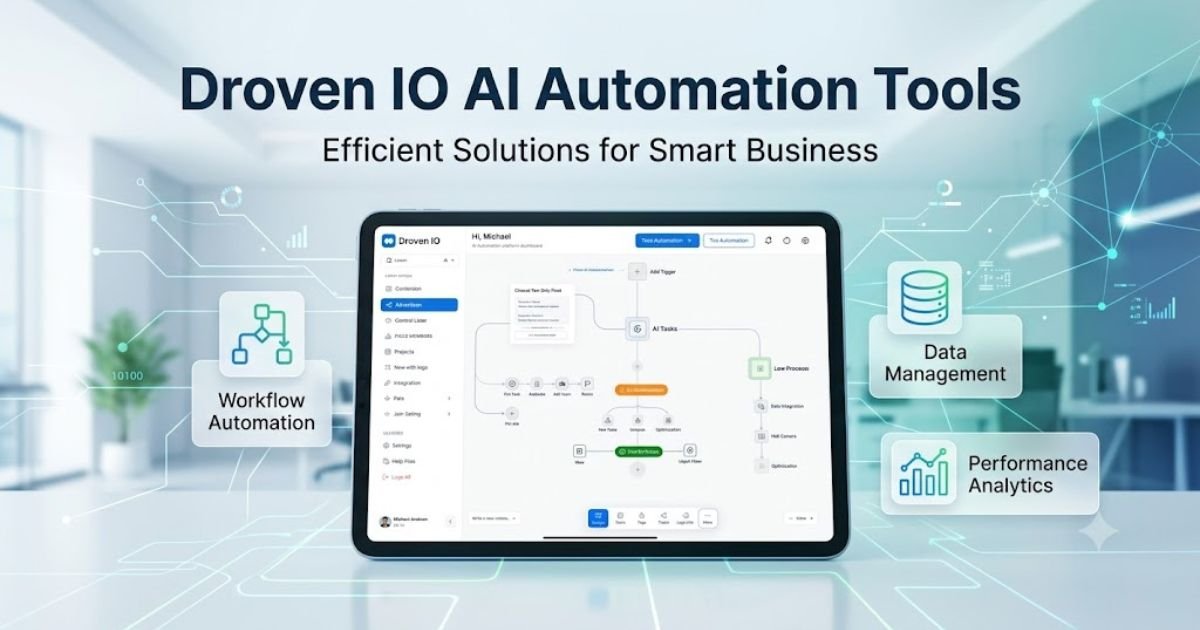
Artificial intelligence has become one of the most influential technologies shaping modern business operations. Organizations across industries are adopting automation solutions to streamline repetitive tasks, improve productivity, and make faster data-driven decisions. As the demand for intelligent automation grows, business leaders are increasingly searching for reliable information that can help them understand available technologies and implementation strategies. This is where droven io ai automation tools have attracted attention among professionals interested in AI-driven workflow automation.
The automation landscape continues to evolve rapidly in 2026. Businesses no longer view automation as a luxury reserved for large enterprises. Instead, companies of all sizes are exploring AI-powered systems that can improve operational efficiency while reducing manual effort. Through educational resources, industry insights, and practical guidance, droven io ai automation tools provide valuable information that helps organizations understand emerging technologies and make informed automation decisions.
What Are Droven IO AI Automation Tools?
The phrase droven io ai automation tools is commonly associated with educational content focused on artificial intelligence, workflow automation, and digital transformation. Rather than being a single software application, Droven IO serves as a resource hub that helps readers learn about automation technologies, AI tools, business innovation, and productivity-enhancing solutions. This approach makes it easier for organizations to navigate the increasingly complex automation ecosystem.
Businesses often face challenges when evaluating automation platforms because there are countless options available in the market. Understanding the strengths, limitations, and ideal use cases of various tools requires time and expertise. By providing clear explanations, industry analysis, and practical insights, Droven IO helps decision-makers identify solutions that align with their business goals while avoiding costly implementation mistakes.
Why AI Workflow Automation Matters
AI workflow automation has transformed the way organizations manage routine tasks and business processes. Traditional workflows often require significant manual effort, leading to delays, inconsistencies, and operational inefficiencies. Artificial intelligence changes this model by enabling systems to process information, recognize patterns, and execute tasks with minimal human intervention. As a result, businesses can achieve higher levels of productivity while maintaining consistent performance.
The growing importance of automation is driven by increasing customer expectations and competitive pressure. Companies are expected to deliver faster responses, personalized experiences, and efficient services across multiple channels. AI-powered workflows help organizations meet these demands by automating repetitive activities and freeing employees to focus on strategic initiatives. This balance between technology and human expertise creates a stronger foundation for sustainable growth.
How Droven IO Supports Business Automation

One of the primary benefits associated with droven io ai automation tools is access to educational content that simplifies complex technology concepts. Many organizations understand the potential value of AI but struggle to determine where to begin. Comprehensive guides, practical examples, and technology reviews help bridge this knowledge gap and provide actionable insights for businesses exploring automation opportunities.
Another important advantage is the ability to stay informed about industry developments. The AI sector changes rapidly, with new platforms, features, and automation strategies emerging regularly. Businesses that remain informed are better positioned to adopt relevant technologies and maintain a competitive advantage. By following trusted resources and industry-focused content, organizations can make smarter decisions regarding automation investments and implementation plans.
Popular AI Automation Platforms and Technologies
The AI automation ecosystem includes a wide range of platforms designed to improve efficiency and reduce manual work. Workflow automation solutions such as Make, Zapier, and n8n enable users to connect applications and automate repetitive processes without extensive coding knowledge. These platforms have become popular because they allow businesses to create automated workflows quickly while maintaining flexibility and scalability.
In addition to workflow automation tools, organizations increasingly use AI-powered assistants, machine learning platforms, and robotic process automation solutions. These technologies can analyze data, automate customer interactions, generate reports, and support decision-making processes. Learning about these innovations through droven io ai automation tools helps businesses understand how different technologies can work together to create comprehensive automation strategies.
Key Benefits of AI Workflow Automation
One of the most significant advantages of AI workflow automation is improved operational efficiency. Automated systems can perform repetitive tasks continuously without interruptions, reducing the time required to complete routine processes. This allows organizations to increase productivity while ensuring that employees can focus on higher-value activities that require creativity, strategic thinking, and problem-solving skills.
Another important benefit is enhanced accuracy and consistency. Human errors can affect business performance, especially when handling large volumes of data or repetitive administrative tasks. AI-powered automation minimizes these risks by following predefined rules and learning from available information. The result is more reliable outcomes, better data quality, and stronger operational performance across departments.
Real-World Applications of AI Automation
Marketing teams frequently use automation technologies to improve campaign performance and customer engagement. AI systems can analyze user behavior, segment audiences, schedule content, and optimize marketing strategies based on real-time insights. These capabilities enable organizations to deliver more relevant experiences while improving return on investment and reducing manual workload.
Customer support is another area where automation delivers measurable value. AI chatbots, automated ticket routing systems, and intelligent knowledge bases help businesses respond to customer inquiries more efficiently. These solutions provide faster support, improve customer satisfaction, and reduce pressure on service teams. As automation technology continues to advance, customer experience improvements remain one of its most valuable business outcomes.
Challenges Businesses Should Consider
Although automation offers numerous benefits, successful implementation requires careful planning. One common challenge involves integrating new technologies with existing business systems. Organizations may encounter compatibility issues, data migration concerns, or workflow disruptions if implementation is not managed properly. Addressing these challenges early can significantly improve project outcomes and reduce operational risks.
Employee adoption is another factor that influences automation success. Team members may be hesitant to embrace new technologies if they do not understand how automation will affect their responsibilities. Providing training, maintaining clear communication, and emphasizing the benefits of automation can help organizations create a smoother transition and encourage long-term acceptance among employees.
Best Practices for Implementing AI Automation
Businesses should begin their automation journey by identifying processes that consume significant time and resources. Tasks that are repetitive, predictable, and rule-based often provide the best opportunities for automation. Starting with manageable projects allows organizations to gain experience, measure results, and build confidence before expanding automation initiatives across additional departments.
Establishing measurable objectives is equally important. Companies should define key performance indicators related to productivity, cost savings, accuracy, and customer satisfaction. Regular performance monitoring helps ensure that automation projects remain aligned with business goals and continue delivering meaningful value. Continuous improvement is essential because technology and organizational needs evolve over time.
Future Trends in AI Workflow Automation
The future of automation is increasingly focused on intelligent systems capable of performing complex tasks with minimal supervision. AI agents are becoming more sophisticated, allowing businesses to automate activities that previously required significant human involvement. These technologies have the potential to improve decision-making, accelerate operations, and create new opportunities for innovation across industries.
Another major trend is hyperautomation, which combines multiple technologies to automate entire business processes from start to finish. This approach integrates artificial intelligence, machine learning, robotic process automation, and advanced analytics into a unified strategy. As these technologies mature, resources such as droven io ai automation tools will continue helping organizations understand emerging trends and evaluate future opportunities.
Conclusion
AI workflow automation is no longer a future possibility—it is an essential component of modern business strategy. Organizations that successfully implement automation can improve efficiency, enhance customer experiences, reduce operational costs, and create stronger foundations for long-term growth. As competition increases across industries, the ability to leverage intelligent automation becomes an important differentiator.
The growing interest in droven io ai automation tools reflects a broader shift toward data-driven operations and digital transformation. By understanding automation technologies, evaluating available platforms, and following proven implementation practices, businesses can unlock new levels of productivity and innovation. Organizations that embrace these opportunities today will be better prepared for the evolving business environment of tomorrow.
FAQs
What are droven io ai automation tools?
Droven IO AI automation tools refer to educational resources, industry insights, and informational content focused on artificial intelligence, workflow automation, and digital transformation strategies for businesses.
Why is AI workflow automation important in 2026?
AI workflow automation helps organizations reduce manual work, improve efficiency, increase accuracy, and respond more effectively to changing customer expectations and market demands.
Which industries benefit most from AI automation?
Industries including marketing, finance, healthcare, customer service, manufacturing, logistics, and human resources can benefit significantly from AI-powered automation solutions.
Can small businesses use AI automation tools?
Yes. Many modern automation platforms offer affordable and scalable solutions designed specifically for small and medium-sized businesses seeking efficiency improvements.
What is the future of AI workflow automation?
Future developments include AI agents, hyperautomation, predictive analytics, intelligent decision-making systems, and greater adoption of no-code and low-code automation technologies.
You may also read: The Importance of Family Support Behind Business Success
