

Pauline Collins was an English actress whose career ran from a West End debut in 1965 to a final film role in 2017, and who is best remembered for two roles: Sarah, the parlour maid in the ITV period drama Upstairs, Downstairs, and Shirley Valentine, the Liverpool housewife she played on stage in London and New York and on screen in the 1989 film. For Shirley Valentine she won the Laurence Olivier Award, the Tony Award and the BAFTA for Best Actress, and she was nominated for the Academy Award for Best Actress. Collins died in November 2025, aged 85, after living with Parkinson’s disease for several years; her family announced her death on 6 November 2025.
At a Glance: Pauline Collins
- Born: 3 September 1940, Exmouth, Devon, England.
- Died: November 2025, aged 85, in a care home in Highgate, north London; her family announced her death on 6 November 2025. She had lived with Parkinson’s disease for several years.
- Best known for: Sarah Moffat in Upstairs, Downstairs (1971–1973) and the title role in Shirley Valentine on stage (1988–1989) and in the 1989 film.
- Major awards for Shirley Valentine: Laurence Olivier Award for Best Actress (1988); Tony Award for Best Actress in a Play (1989); BAFTA Award for Best Actress in a Leading Role (1990). She was also nominated for the Academy Award for Best Actress and for a Golden Globe.
- Other leading television roles: Forever Green (1989–1992) and The Ambassador (1998–1999).
- Honour: Appointed OBE in the 2001 Birthday Honours for services to drama.
- Family: Married to actor John Alderton from 1969 until her death; three children, Nicholas, Kate and Richard, and a daughter, Louise.
- Autobiography: Letter to Louise, published in 1992.
- Final film: The Time of Their Lives (2017).
Who Was Pauline Collins?
Pauline Angela Collins was born on 3 September 1940 in Exmouth, Devon, the daughter of a school headmaster, William Henry Collins, and a teacher, Mary Honora Collins. She grew up near Liverpool, in Wallasey, Cheshire, and trained first as a teacher before studying acting at the Central School of Speech and Drama in London.
Her West End debut came in 1965 in Passion Flower Hotel, and her first film appearance followed in 1966 in Secrets of a Windmill Girl. Her first television role had been in the long-running medical serial Emergency Ward 10.
How Did Pauline Collins Become Famous?
Collins’s first big break came in 1969, when she starred in the first series of the BBC sitcom The Liver Birds, about two young women sharing a flat in Liverpool. The series became a long-running hit, although Collins did not stay with it.
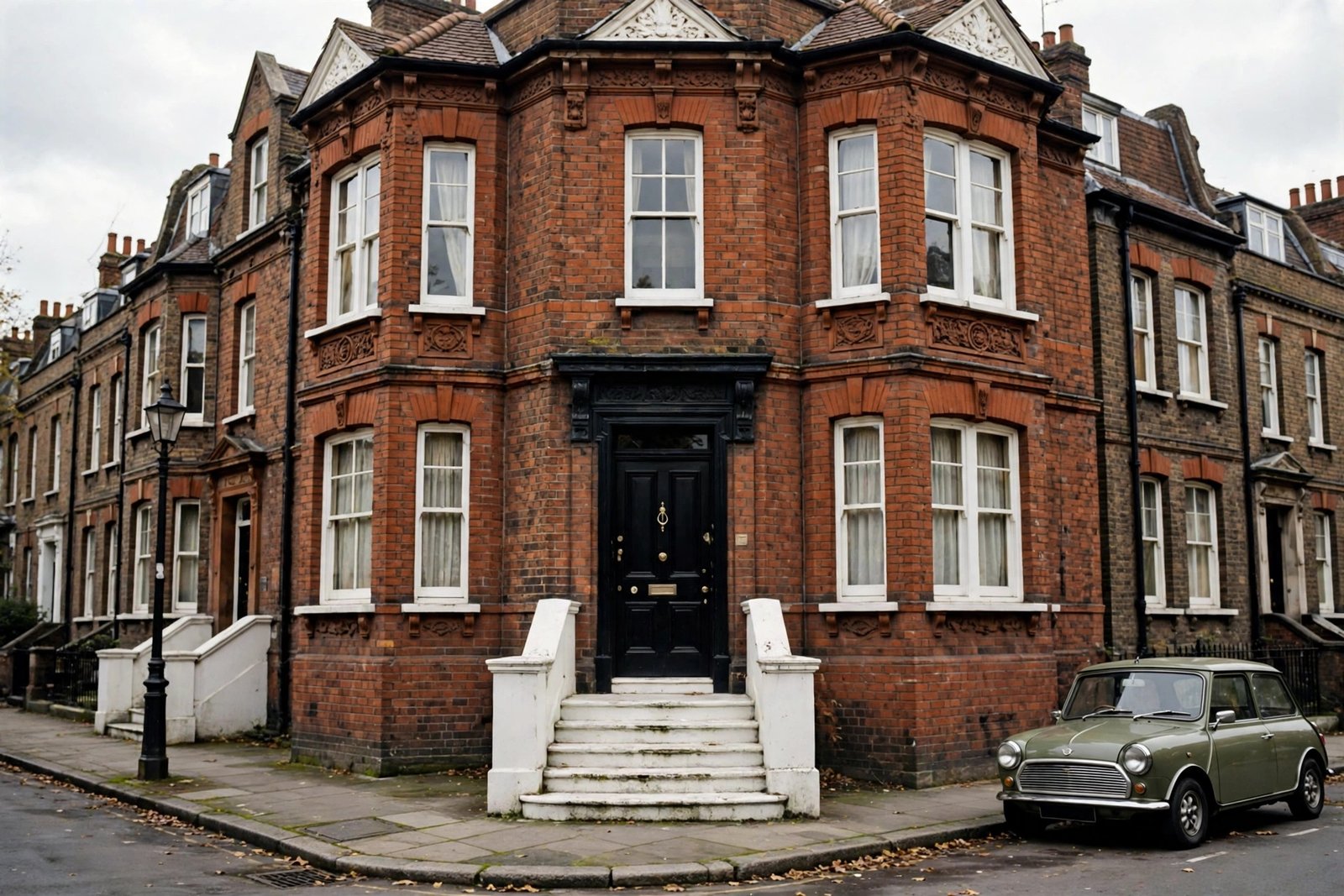
In 1971 she joined the cast of Upstairs, Downstairs, ITV’s period drama about an aristocratic family and their servants at 165 Eaton Place in Edwardian London. Collins played Sarah Moffat, a parlour maid — spirited, impulsive and unlucky in love — appearing regularly through the first two series until 1973. Sarah’s storylines, including a romance with James Bellamy and the loss of her baby, were among the most talked-about in the early years of the series, and the character’s popularity was such that Collins and her husband, John Alderton, who played the chauffeur Thomas Watkins, were given their own spin-off, Thomas & Sarah, in 1979.
The same period also produced one of the most famous “what if” stories of her career. In 1967 she had played Samantha Briggs in the Doctor Who serial The Faceless Ones, and the production team offered her the chance to continue the character for 39 more episodes. She turned it down. “I thought it was like a prison sentence,” she later told The Guardian, adding that a long contract might have given her a profile early on, “but then I would have missed so many things.” Nearly forty years later she returned to Doctor Who as Queen Victoria in the 2006 episode “Tooth and Claw” — making her one of only a small number of actors to have appeared in both the original and the revived series.
She was nominated for an Olivier Award in 1976 for the play Engaged at the Old Vic, and starred opposite Alderton in the sitcom No, Honestly (1974–1975).
What Made Shirley Valentine Her Defining Role?

The role that changed everything arrived when Collins was in her late forties. Willy Russell’s one-character play Shirley Valentine — about a bored Liverpool housewife who talks to her kitchen wall, dreams of the girl she used to be, and finally takes a holiday to Greece that remakes her life — premiered in Liverpool in 1986. Collins took the title role when it opened in London’s West End at the Vaudeville Theatre in 1988, carrying a full evening of theatre entirely on her own, speaking directly to the audience throughout.
The performance won her the Laurence Olivier Award for Actress of the Year in a New Play in 1988. The following year she took the play to Broadway’s Booth Theatre, winning the Tony Award for Best Actress in a Play in June 1989, along with the Drama Desk, Drama League and Outer Critics Circle awards. Accepting the Tony, she said: “What’s marvellous about being here is it’s proof that miracles can happen at any time in our lives, even when you’re getting on a bit.”
The film version, directed by Lewis Gilbert from Russell’s own screenplay and filmed in Mykonos, London and Liverpool, was released in 1989. Collins reprised the role opposite Tom Conti as Costas, the Greek taverna owner, with Alison Steadman as her friend Jane and Bernard Hill as her husband Joe. The film was a commercial success, grossing $38 million worldwide, and in the UK it took £11.5 million, making it the highest-grossing independent British film of the year.
Why did the role last? Shirley Valentine spoke to an audience that rarely saw itself as the hero of a story: a middle-aged woman whose children had grown up and whose marriage had gone quiet. Collins played her without sentimentality — funny, sharp, and honest about the small humiliations of a life narrowed by routine.
What Awards Did Pauline Collins Win?
Collins won nine awards for Shirley Valentine across stage and screen, a sweep that is rare for a single role. The most important are listed below, with the year of the award.
| Award | Category | Year | Result |
|---|---|---|---|
| Laurence Olivier Award | Actress of the Year in a New Play | 1988 | Won |
| Tony Award | Best Actress in a Play | 1989 | Won |
| Drama Desk Award | Outstanding Actress in a Play | 1989 | Won |
| Drama League Award | Distinguished Performance | 1989 | Won |
| Outer Critics Circle Award | Outstanding Actress in a Play | 1989 | Won |
| BAFTA Film Award | Best Actress in a Leading Role | 1990 | Won |
| Evening Standard British Film Award | Best Actress | 1990 | Won |
| Academy Award | Best Actress | 1990 | Nominated |
| Golden Globe Award | Best Actress, Motion Picture Musical or Comedy | 1990 | Nominated |
Two points in that list are worth stating clearly, because some online profiles get them wrong. First, Collins was nominated for a Golden Globe for Shirley Valentine; she did not win one. Second, her Academy Award nomination came at the 1990 ceremony, for the 1989 film; the Oscar went to Jessica Tandy for Driving Miss Daisy. Her BAFTA win is a matter of record in BAFTA’s own awards archive, which lists Pauline Collins as the 1990 winner for Leading Actress for Shirley Valentine.
She had already been Olivier-nominated in 1976 for Engaged, and in 2001 she was appointed OBE in the Birthday Honours for services to drama.
What Else Did Pauline Collins Star In?
After Shirley Valentine, Collins deliberately avoided being typecast as Shirley. Her film roles took her in very different directions: a feisty Irish-American nun in Calcutta in City of Joy (1992); a Jewish mother in Nazi-occupied Budapest in My Mother’s Courage (1995); an Australian missionary held prisoner by the Japanese in Paradise Road (1997); and later, Margaret “Madge” Baker in Albert Nobbs (2011), Cissy Robson in Dustin Hoffman’s Quartet (2012), and Priscilla in The Time of Their Lives (2017), her final film role.
On television she carried two further leading dramas. In Forever Green (1989–1992) she played Harriet Boult, and in the BBC’s 13-part series The Ambassador (1998–1999) she played Harriet Smith, the British ambassador to Ireland. Later television work included Miss Flite in the BBC’s Bleak House (2005), Mrs Gamp in Dickensian (2015), and Sue in the comedy-drama Mount Pleasant (2011).
Who Was Pauline Collins Married To?
Collins married actor John Alderton in 1969. They appeared together again and again: in Thomas & Sarah, in the sitcom No, Honestly, in Wodehouse Playhouse, in Forever Green, and on stage. Their marriage lasted 56 years, until her death, and Alderton’s tribute after her death described her as his “lifelong love” and “a partner, work collaborator and wife of 56 years.”
The couple had three children together — Nicholas, Kate and Richard — and lived in Hampstead, London. Collins also had a daughter, Louise, from an earlier relationship with actor Tony Rohr. Louise had been placed for adoption in 1964, and mother and daughter were reunited 21 years later. Collins wrote about this openly in her 1992 autobiography, Letter to Louise, which takes its title from her daughter. It is the most personal thing she published, and the reason the book is still cited whenever her life is discussed.
When Did Pauline Collins Die?
Pauline Collins died in November 2025, aged 85. Her family announced her death on Thursday 6 November 2025, saying she had died peacefully in her care home in Highgate, north London, surrounded by her family, after living with Parkinson’s disease for several years. (Some reports give the date of death as 5 November 2025; the family’s announcement was made on 6 November.) The family’s statement described her as “a bright, sparky, witty presence on stage and screen” whose career had seen her play “politicians, mothers and queens,” and thanked her carers, “angels who looked after her with dignity, compassion, and most of all love.”
Tributes followed from across British acting. Her husband said: “What I saw was not only her brilliant range of diverse characters but her magic of bringing out the best in all of the people she worked with. She wanted everyone to be special and she did this by never saying ‘Look at me’.” Tom Conti, her co-star in Shirley Valentine, was among those who paid tribute, and the BBC, The Guardian and The New York Times all carried obituaries.
Why Does Pauline Collins Still Matter?
Collins matters for two reasons that go beyond any single performance. The first is Shirley Valentine itself. The play and film gave a middle-aged working-class woman a story in which she was not a mother, a wife or a joke, but the person whose choices mattered. The role has been revived many times since, but Collins’s version remains the reference point, and winning the Olivier, Tony and BAFTA for the same part is a record few performers can match.
The second is the shape of her career. She became famous in her thirties, won her greatest honours in her late forties, and kept working into her seventies, taking parts that were smaller but never lesser. She turned down a long Doctor Who contract that might have made her famous sooner, because she did not want to be confined to one character — and then proved, across Upstairs, Downstairs, Shirley Valentine, The Ambassador and Quartet, that range was the point. Like fellow British stage and screen actress Miriam Margolyes, she moved easily between theatre, television and film for more than fifty years, from 1962 to 2017. For audiences who grew up with her, she was, in her husband’s phrase, “the nation’s sweetheart” — because she played ordinary women as if their lives were worth a leading role.
Frequently Asked Questions
Who was Pauline Collins?
Pauline Collins (1940–2025) was an English actress of stage, television and film. She was best known for playing Sarah Moffat in the ITV drama Upstairs, Downstairs (1971–1973) and for the title role in Shirley Valentine, which she played on stage in London and New York and in the 1989 film. She won an Olivier Award, a Tony Award and a BAFTA for the role.
What was Pauline Collins famous for?
She was famous first as Sarah, the parlour maid in Upstairs, Downstairs, and then, definitively, as Shirley Valentine — the Liverpool housewife who rediscovers herself on a holiday in Greece. The stage version won her the Olivier and Tony Awards; the 1989 film won her the BAFTA for Best Actress and an Academy Award nomination.
Did Pauline Collins win an Oscar?
No. Pauline Collins was nominated for the Academy Award for Best Actress for Shirley Valentine at the 1990 ceremony, but she did not win; the award went to Jessica Tandy for Driving Miss Daisy. She did win the BAFTA for Best Actress in a Leading Role for the same performance, and she was also nominated for a Golden Globe.
When did Pauline Collins die?
Pauline Collins died in November 2025, aged 85. Her family announced her death on 6 November 2025, saying she had died peacefully in her care home in Highgate, north London, after living with Parkinson’s disease for several years. Some reports give the date of death as 5 November 2025.
Who was Pauline Collins married to?
Pauline Collins was married to actor John Alderton from 1969 until her death in 2025 — a marriage of 56 years. They had three children together: Nicholas, Kate and Richard. Collins also had a daughter, Louise, from an earlier relationship.
What was Pauline Collins in Upstairs, Downstairs?
Pauline Collins played Sarah Moffat, a parlour maid at 165 Eaton Place, appearing regularly in the first two series of Upstairs, Downstairs from 1971 to 1973. The character’s popularity led to the spin-off series Thomas & Sarah (1979), in which Collins and John Alderton reprised their roles as Sarah and the chauffeur Thomas Watkins.
Did Pauline Collins appear in Doctor Who?
Yes, twice. In 1967 she played Samantha Briggs in the serial The Faceless Ones and was offered the chance to continue the role for 39 more episodes, which she declined. In 2006 she returned to the series as Queen Victoria in the episode “Tooth and Claw”, becoming one of the few actors to have appeared in both the original and the revived series.
